
By Bill Wertman, CEO, Big Bend Hospice
In rural North Florida, distance is measured in more than miles.
It can mean the difference between having a healthcare provider nearby and driving an hour or more for an appointment. It can mean fewer specialists, fewer resources, and fewer choices. And for a family caring for someone with a serious or terminal illness, those miles can become one more burden at a time when they are already carrying enough.
For 44 years, Big Bend Hospice has cared for families across North Florida. Increasingly, that calling has taken us farther west, into communities where access to healthcare can look very different than it does in a larger city.
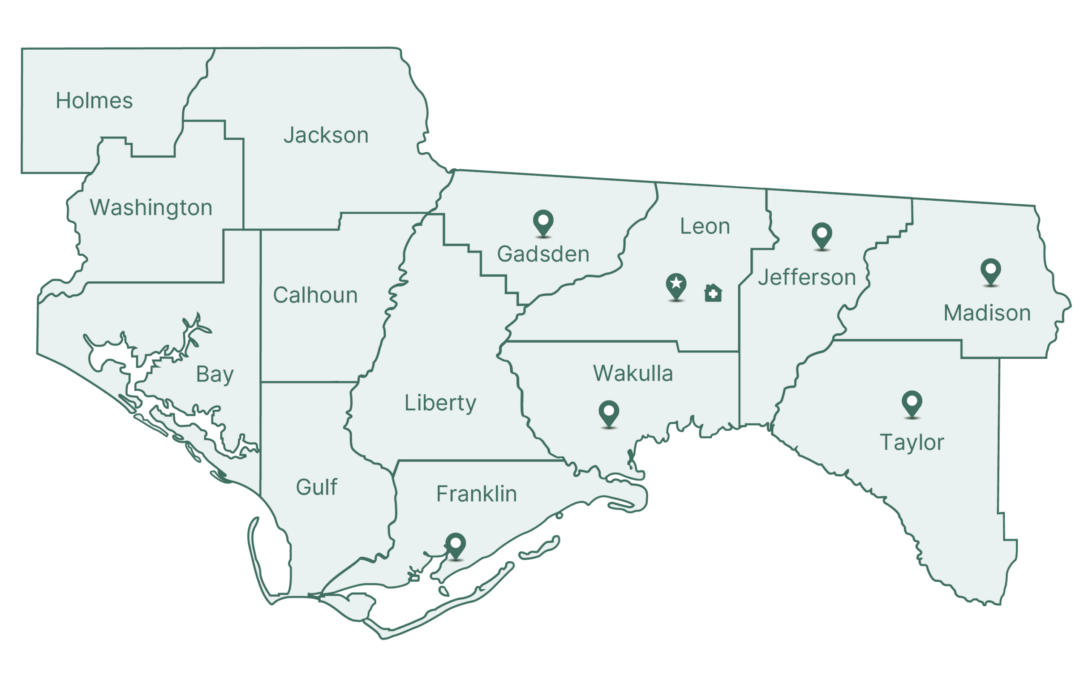
Our expansion into Gulf, Jackson, Calhoun, Washington, Holmes, and Bay counties has been an important part of that work. We didn’t enter these communities simply to put more counties on a service-area map. We went because families live there who deserve the same access to compassionate, high-quality care as anyone else.
Where you live should not determine how well you are cared for at the end of life.
That sounds simple. Making it a reality is not.
Rural healthcare requires us to think differently. A nurse may spend significant time traveling between patients. Families may live miles from the nearest hospital or pharmacy. Caregivers may have fewer nearby resources to call upon for help. Even finding someone who understands what services are available can be difficult.
Hospice can help fill some of those gaps because much of our work happens where patients already are.
Our teams travel the back roads. They enter farmhouses, small-town nursing facilities, family homes, and homeless encampments miles from the nearest medical center. Nurses manage pain and symptoms. Social workers help families navigate difficult decisions and connect with resources. Chaplains provide spiritual support. Certified nursing assistants offer hands-on care. Our teams also support the caregivers who are often doing extraordinary work around the clock.
That presence matters.
When a family is caring for someone with a terminal illness, asking them to repeatedly travel long distances for help can add stress to an already difficult situation. Hospice allows us to bring much of that care to the patient, helping people remain in familiar surroundings and close to the people who matter most.
Our Mobile Unit has given us another way to reach communities where access may be limited. Instead of assuming people can always come to healthcare, the resource on wheels allows healthcare to come closer to them. To me, that represents what rural healthcare should be willing to do: meet people where they are.
Our westward expansion has also required us to listen. We have built relationships with local physicians, hospitals, skilled nursing facilities, community leaders, and others who understand their communities better than anyone. We are not there to replace those relationships. We are there to strengthen the network of support surrounding patients and families.
And we still have work to do.
Opening an office or entering a new county does not immediately erase rural healthcare disparities. Trust takes time. Access requires people, resources, and sustained commitment. A presence only matters if we continue showing up, and that is the commitment we are making.
As the area’s only locally-owned nonprofit hospice provider, Big Bend Hospice has an obligation to look beyond where care is easiest to provide. Our mission calls us to consider where our expertise is needed and how we can use the resources entrusted to us to reach people who might otherwise face barriers to care.
I am proud of the progress we have made in Gulf, Jackson, Calhoun, Washington, Holmes, and Bay counties, and especially proud of the healthcare professionals who serve in these areas every day. They are doing more than expanding our footprint. They are building relationships, earning trust, and reminding our rural neighbors that they have not been forgotten.